
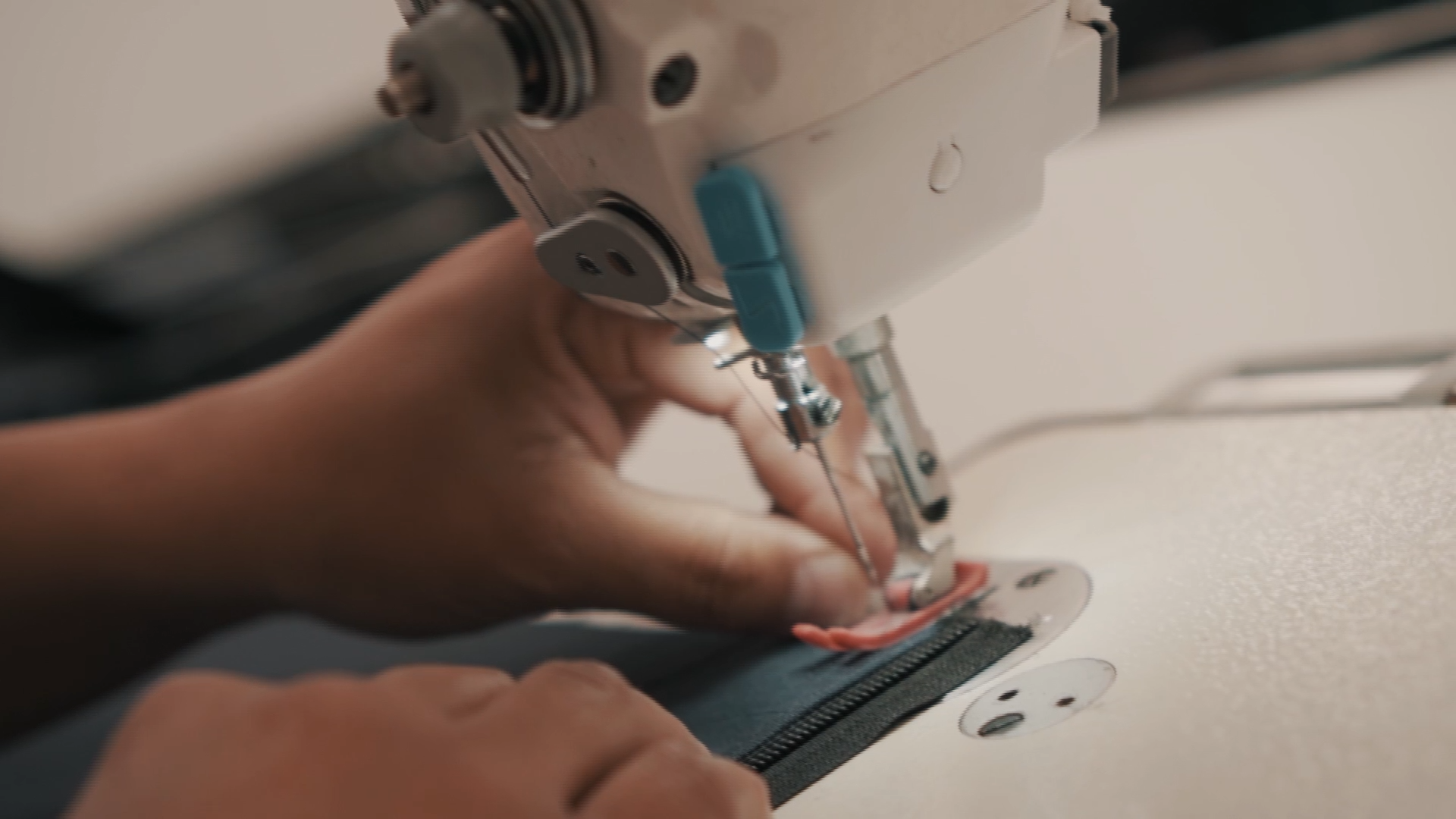
If you work with operational uniforms, you've probably been through this.
You buy a batch.
Then you buy again.
And you notice something strange.
The fabric feels different.
The fit changes.
The durability isn't the same.
Even though it's "the same product."
And no... this is not a coincidence.
What happens inside production that nobody tells you.
In most garment factories, the process is not controlled.
It is simply repeated.
And that changes everything.
Because without a defined process:
* each seamstress executes differently
* production time varies
* the finish loses its standard
* the final resistance of the piece fluctuates
Result?
You never know exactly what you're going to receive.
Sewing is not just "closing fabric"
There is a huge difference between producing and producing with standards.
An operational piece needs to consider:
* correct stitch type for each area
* adjusted thread tension
* reinforcements at high-stress points
* smart assembly sequence
If this doesn't exist, the problem shows up in use.
And in your case, in the field.
The most expensive mistake: not standardizing the process
When there is no defined process, each piece becomes a prototype.
And that is dangerous.
Especially for security companies, where the uniform:
* endures constant friction
* undergoes physical stress
* needs to maintain appearance even under intense use
Without standardization, durability becomes a matter of luck.
What structured companies do differently
Companies that take production seriously don't depend on people.
They depend on process.
And that involves:
* defining standard time per operation
* well-designed production sequence
* quality control at each stage
* continuous team training
This ensures something simple yet powerful: repeatability with quality.
When the process is done right, the result shows up at the client
You may not see the stitching.
But you feel it.
In use, this translates to:
* pieces that don't split at the seams
* less need for replacement
* appearance preserved for longer
* more confidence in the operation
And that feeds directly back into the perception of your company.
In practice, your uniform reveals how it was made
Even without knowing it, your client notices.
A misaligned uniform conveys carelessness.
A well-structured uniform conveys control.
And that starts way back, in production.
Atenas Tactical Gear
Here, production is not improvisation. It is process.
Each piece is designed to withstand the reality of those in the field.
With standards, repetition, and control.
Because in the end, it's not just about sewing.
It's about delivering something that works every day.
Now look at your uniform today
Was it produced... or was it built with process?